Meet Nichole Stewart
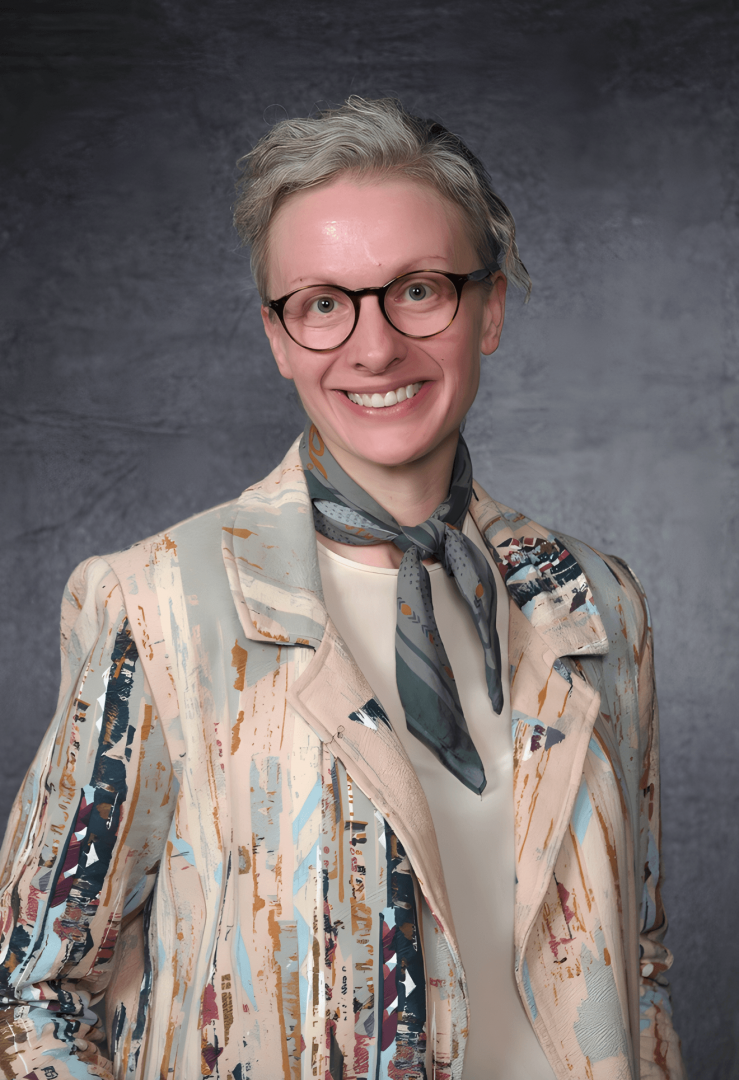


We had the good fortune of connecting with Nichole Stewart and we’ve shared our conversation below.
Hi Nichole, is there something that you feel is most responsible for your success?
Honestly? Knowing what broken looks like.
I spent 20 years in healthcare — not in some executive suite, but on the floor as a nurse inside organizations with over 20,000 employees. I watched processes fail every single day. A patient’s follow-up gets missed because two systems don’t talk to each other. A team is doing the same data entry three different times because nobody ever connected the tools they were already paying for. Good people working hard and still getting bad outcomes — not because they weren’t trying, but because the systems underneath them were a mess.
That’s what I carried with me when I started Solutionary. I didn’t come into consulting from a tech background or because AI was trending. I came into it because I’d already spent two decades solving exactly this problem — just in a different industry. The broken follow-up in a clinic? That’s the same broken follow-up costing a service business revenue. The disconnected systems at a hospital? Same thing happening at a growing company with five tools that don’t share a single piece of data.
So the biggest factor behind Solutionary’s success is that we don’t start with the technology. We start with the operation. What’s actually happening day to day? Where are things falling apart? What’s costing you money that you can’t even see yet? Then we build the system around that — not the other way around.
Most businesses don’t need more software. They need someone who understands how work actually flows and where it’s breaking. That’s the gap I fill.
Alright, so for those in our community who might not be familiar with your business, can you tell us more?
Solutionary exists because I got tired of watching the same problem play out everywhere I went.
I spent 20 years in healthcare — working directly in patient care as a nurse, then leading department-level initiatives inside organizations with over 20,000 employees. And the pattern was always the same: good people, working hard, getting bad results because the systems underneath them were a mess. Follow-ups falling through the cracks. Tools that don’t talk to each other. Teams doing the same work twice because nobody ever sat down and connected the dots between the technology they were already paying for and the work that actually needed to get done.
When I stepped outside of healthcare and started looking at service-based businesses — home services, professional services, healthcare practices running their own operations — I saw the exact same thing. Different industry, same broken infrastructure. The business is growing, revenue is climbing, but the back end is held together with sticky notes and good intentions. And at some point that catches up with you.
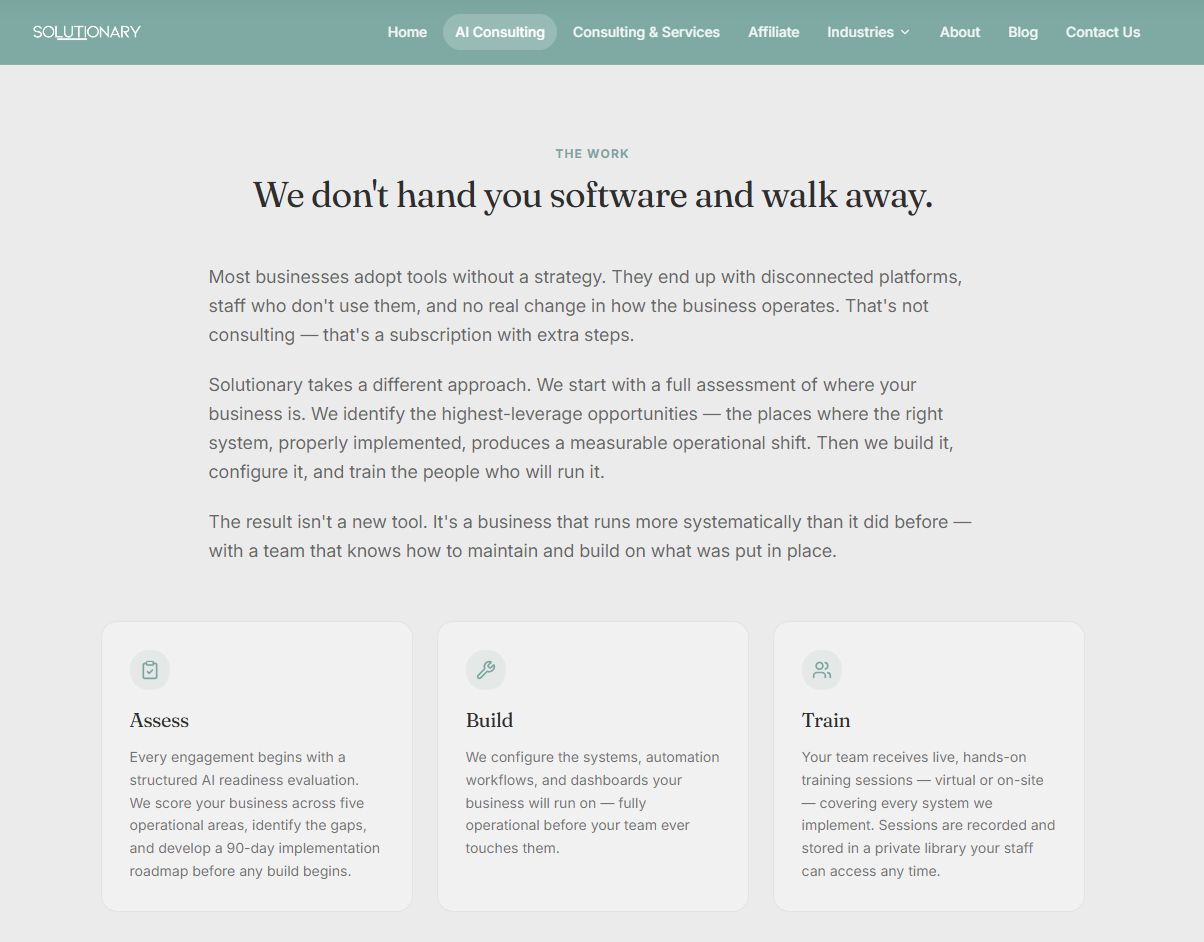
That’s what Solutionary fixes. We’re not a software company and we’re not a marketing agency. We design and build the operational systems that let a business actually handle its own growth — CRM infrastructure, automated workflows, AI-assisted communication, reporting that shows you what’s working and what’s leaking revenue. The stuff that runs in the background so the owner can stop being the glue holding everything together.
And right now, AI is changing how fast that gap opens. The businesses that figure out how to integrate AI into their operations — not as a gimmick, but as actual infrastructure — are going to pull ahead fast. The ones that don’t are going to wonder what happened. I’ve watched that exact thing play out in healthcare. The organizations that adopted new technology early and built it into their workflows thrived. The ones that waited got buried trying to catch up. That’s happening right now across every industry, and most business owners don’t even see it coming yet. A big part of what we do at Solutionary is help businesses get ahead of that curve — implementing AI in ways that actually make the operation stronger, not just adding another tool to the pile.
What sets us apart is where I came from. Most automation consultants come from marketing or tech. I came from operations. I’ve been in the middle of it — leading teams, managing patient care, and watching broken processes cause real problems in real time. That changes how you think about building systems. I don’t start with “what software should we use?” I start with “what’s actually happening day to day and where is it falling apart?” The technology comes after that — and it’s always in service of the operation, not the other way around.
Was it easy getting here? No. And I’m not going to dress that up. I built Solutionary while still working full-time in healthcare leadership. I also launched Scoop on the Hill — a community newsletter that’s grown to over 6,000 subscribers — using the same systems and frameworks I now build for clients. There were plenty of nights where I was troubleshooting an automation at midnight after a full day at the clinic. Nobody handed me a playbook for this. I figured it out the same way I figured things out as a nurse — by looking at what’s broken, learning the tools, and building something that works.
The biggest lesson I’ve learned is that most businesses don’t need more tools. They need someone to look at what they already have and make it work together. I can’t tell you how many times I’ve walked into a situation where a business is paying for a CRM, an email platform, a scheduling tool, and a review system — and none of them are connected. They’re spending money on five different things and getting the value of maybe half of one. That’s not a technology problem. That’s an operations problem. And that’s what I solve.
What I want people to know about Solutionary is simple: we’re not here to sell you another tool or add more complexity to your business. We’re here to make what you already have actually work, build the systems that let you grow without everything falling apart, and make sure you’re not the business that gets left behind because you waited too long to take AI seriously.
Any places to eat or things to do that you can share with our readers? If they have a friend visiting town, what are some spots they could take them to?
If someone was visiting me for a week, I’m packing us up and heading to Round Top, Texas. No question.
If you’ve never been, Round Top is this tiny town — population 90 — out in the rolling countryside between Houston and Austin. Twice a year, during the spring and fall antiques shows, it turns into this massive, sprawling treasure hunt spread across 20+ miles of highway, barns, tents, fields, and dance halls. Tens of thousands of people show up from all over the country. It’s one of those things you have to see to believe.
We’d time it for the fall show — the weather is finally cooperating after a Texas summer and everything just feels better out there in October.
First morning, we’re making an early stop at Royer’s Pie Haven. That’s non-negotiable. You’re getting a slice of something ridiculous — the Texas Trash pie or the lemon blueberry — before the crowds hit. Coffee in hand, pie in your stomach, and then we’re spending the entire day walking the streets of Warrenton. That’s where the real digging happens. Hundreds of tents and vendors overflowing with vintage clothing, handmade quilts, one-of-a-kind furniture, and stuff you didn’t know you needed until you saw it. Wear comfortable shoes because you will walk for hours and still not see everything.
For dinner, Royers Cafe in Round Top is the move — it’s been around forever and the food is worth the wait. Lulu’s is another favorite if you want Italian in an 1800s stone building with an underground wine cellar. And if you’re in the mood for a good steak, JW’s Steakhouse in Carmine is about ten minutes down the road and worth every mile.
For drinks and live music, Zapp Hall in Warrenton is legendary during show season — they do live music nights that turn into the kind of evening you don’t forget. Round Top Brewing is great for a more laid-back afternoon vibe with cold beer and a big patio. And if you want something a little more upscale, Prost Wine Bar is a perfect spot to wind down with a glass of wine after a full day of shopping.
Between shopping days, I’d work in a morning at Buescher State Park — it’s close by and the trails through the oak canopy are a nice reset after being on your feet all day in the fields. Or if you’re up for a little drive, Monument Hill State Historic Site near La Grange has some beautiful overlooks and a lot of Texas history.
Honestly though, the best part of Round Top isn’t any one restaurant or venue. It’s the pace. You’re driving down a two-lane highway past longhorns and oak trees, stopping at whatever barn catches your eye, eating pie for breakfast and not apologizing for it. It’s the kind of week where you come home tired but completely recharged.
Shoutout is all about shouting out others who you feel deserve additional recognition and exposure. Who would you like to shoutout?
I don’t have one single person I can point to and say “they made this happen.” But if I’m being real, the biggest influence on how I think and how I built Solutionary came from the teams I worked alongside in healthcare for 20 years.
When you’re a nurse, you learn fast that the system either works or people pay the price. And the people who taught me that weren’t executives or mentors in the traditional sense — they were the charge nurses, the techs, the front desk staff who figured out workarounds every single day because the process was broken and the work still had to get done. That resourcefulness, that “we’re going to make this work regardless” mindset — that shaped everything about how I approach operations and consulting today.
I’d also give credit to my kids. I have 13-year-old twins who are running their own subscription business right now. Watching them figure things out, make decisions, and build something from scratch reminded me that starting something doesn’t require permission or a perfect plan. It just requires doing it. They probably don’t realize how much that pushed me to stop thinking about Solutionary and actually build it.
So no single shoutout — more of a long list of people who showed me what hard work looks like and what happens when good people don’t have good systems behind them.
Website: https://www.getsolutionary.com
Instagram: https://www.instagram.com/get.solutionary
Linkedin: https://www.linkedin.com/in/nicholelstewart/
Facebook: https://www.facebook.com/profile.php?id=61586966958001